After spending some time on the air, most of us end up asking the same question: "I've made all these QSOs, so what's next?" That's exactly where amateur radio awards come in. Awards give your contacts a goal and a direction, turning an ordinary evening of CQ calls into the thrill of finally working a missing country or zone. In this post we'll look at the best-known awards, how to apply, and how to chase them from Turkey.
ℹ️ In this article
What Is an Award and Why Chase One?
In ham radio, an award is a certificate that documents confirmed contacts made under a specific set of rules. The rules are usually set by a national society or a publication: work a certain number of countries, continents, zones, islands or prefixes. When you apply, you have to prove those contacts really happened, either with QSL cards or electronic confirmations.
The real value of an award isn't the frame on the wall; it's how much it teaches you. Chasing an award naturally builds skills such as:
- Knowing which band opens to which region at what time (reading propagation),
- Breaking pile-ups and working split,
- Keeping a clean log and handling confirmations,
- Spotting the weak points in your antenna and station.
In short, awards give you a fresh answer every day to the question "what should I do on the radio today?"
The Best-Known International Awards
There are hundreds of award programs worldwide, but a handful show up on almost every DXer's list. Here's a good starting map:
| Award | Issued by | Basic requirement |
|---|---|---|
| WAC (Worked All Continents) | IARU | At least one confirmed contact with each of the six continents |
| DXCC (DX Century Club) | ARRL | Confirmed contacts with at least 100 entities on the DXCC List |
| WAZ (Worked All Zones) | CQ | Confirmed contacts with all 40 CQ zones |
| WPX (Worked Prefixes) | CQ | Confirmed contacts with a set number of different callsign prefixes |
| IOTA (Islands on the Air) | IOTA | Confirmed contacts with numbered island groups |
| WAS (Worked All States) | ARRL | Confirmed contacts with all 50 US states |
WAC: The Perfect First Award
The IARU's WAC is a great first target for newcomers. One contact each with Europe, Asia, Africa, North America, South America and Oceania is all it takes. Operating from Turkey is a real advantage here: Europe, Asia and Africa are easy to hear almost every day. The real challenge is usually Oceania and South America, and timing your attempts to the right propagation windows, or using weak-signal modes like FT8, makes a big difference.
DXCC: The Yardstick of DXing
The ARRL's DXCC program is the common language of the DX community. Its "countries" don't map one-to-one onto political borders; the ARRL calls them entities and defines them with specific criteria, so some remote islands count separately from their parent nation. The current DXCC List has about 340 active entities, and it can change over time.
The basic DXCC certificate requires 100 entities. Beyond that come band and mode awards (20 m DXCC, CW DXCC, Digital DXCC and so on), endorsements, and the Honor Roll for those near the top of the list. The ARRL DXCC page is the official reference.
WAZ, WPX and IOTA
CQ magazine's WAZ award divides the world into 40 CQ zones and famously asks for all of them. Turkey sits in CQ zone 20 (and ITU zone 39). Some zones, especially sparsely populated ones in the Pacific and polar regions, can take years to land.
WPX counts callsign prefixes such as TA4, TA1, DL1 or K3. Because contests and special event stations keep producing new prefixes, it's a fast-moving and very motivating program. Mode thresholds and rules get updated from time to time, so check CQ's official rules before you apply.
IOTA groups the world's islands and assigns each group a reference number (in the form AS-xxx or EU-xxx, for example). Several islands off the Turkish coast carry IOTA references, so you can take part both as a chaser and as an activator.
Confirmations: QSL Cards, LoTW and eQSL
Confirmation is the backbone of every award. Making the contact isn't enough; the other station has to confirm it too. There are three main routes:
- Paper QSL cards: The classic, nostalgic method, sent direct or via the QSL bureau. Slow, but still accepted by many programs and wonderful to collect.
- LoTW (Logbook of The World): The ARRL's electronic confirmation system. It's certificate-based, requires identity verification, and is accepted for DXCC, WAS and many CQ awards. When both stations upload the same QSO, the match counts as confirmed automatically.
- eQSL: An electronic QSL card service. Some programs accept it (including several CQ awards), but it is not valid for DXCC.
We covered logging and LoTW setup in an earlier post, so make sure your log is tidy and up to date before you start chasing awards. Always check each program's rules for which confirmation types it accepts.
A Practical Roadmap for Award Chasing from Turkey
Setting a goal is easy; making progress takes patience. Here's a step-by-step plan:
- Clean up your log: Gather all your past contacts in a single logging program. Most loggers calculate DXCC entities and zones automatically and show you what's still missing.
- Sign up for LoTW: The certificate process can take a while, so start early. Upload your older contacts too; you may find a surprising number of confirmations already waiting.
- Go for WAC first: A quick win keeps the motivation high.
- Follow the DX cluster and bulletins: DXpedition announcements are your best chance to work rare entities.
- Get into contests: In big events like CQ WW or CQ WPX you can pick up dozens of new entities and hundreds of new prefixes in a single weekend.
- Mix up bands and modes: 40 and 20 metres are the classic DX bands, while 17, 15, 12 and 10 metres can surprise you depending on solar activity. FT8 can reach distant regions even when conditions are marginal.
ℹ️ Note
A small tip: when you hear a rare station, listen first. Working out whether they're running split, where they're listening and what rhythm the operator has will get you in the log far faster than calling blindly.
Ethics and Good Operating
Award fever can sometimes make pile-ups tense. Remember that the DXpedition team on the other end is trying to serve thousands of people. A few basic habits make life easier for everyone:
- Call in the listening range the DX station gives, not on their transmit frequency.
- Give your full callsign clearly; don't send just the last letters.
- Once you're in the log, don't keep calling on the same band and mode; give others a chance.
- Log honestly, and don't push for confirmation of a contact you're unsure about.
Don't forget that you can help others earn awards too. An activation from a rare IOTA island or a less active area can close a gap on the wish lists of hams all over the world.
Summary
Amateur radio awards work like a game that gives your QSOs purpose and makes you a better operator. Start with WAC, then widen your horizons with DXCC, WAZ, WPX and IOTA. A clean log, LoTW confirmations, watching propagation and good operating habits are the foundations of the journey, and Turkey's position close to three continents gives you a nice head start.
Which award are you chasing, or how did you earn your first one? Which missing entity has given you the hardest time? Share your stories in the comments and let's talk. 73!
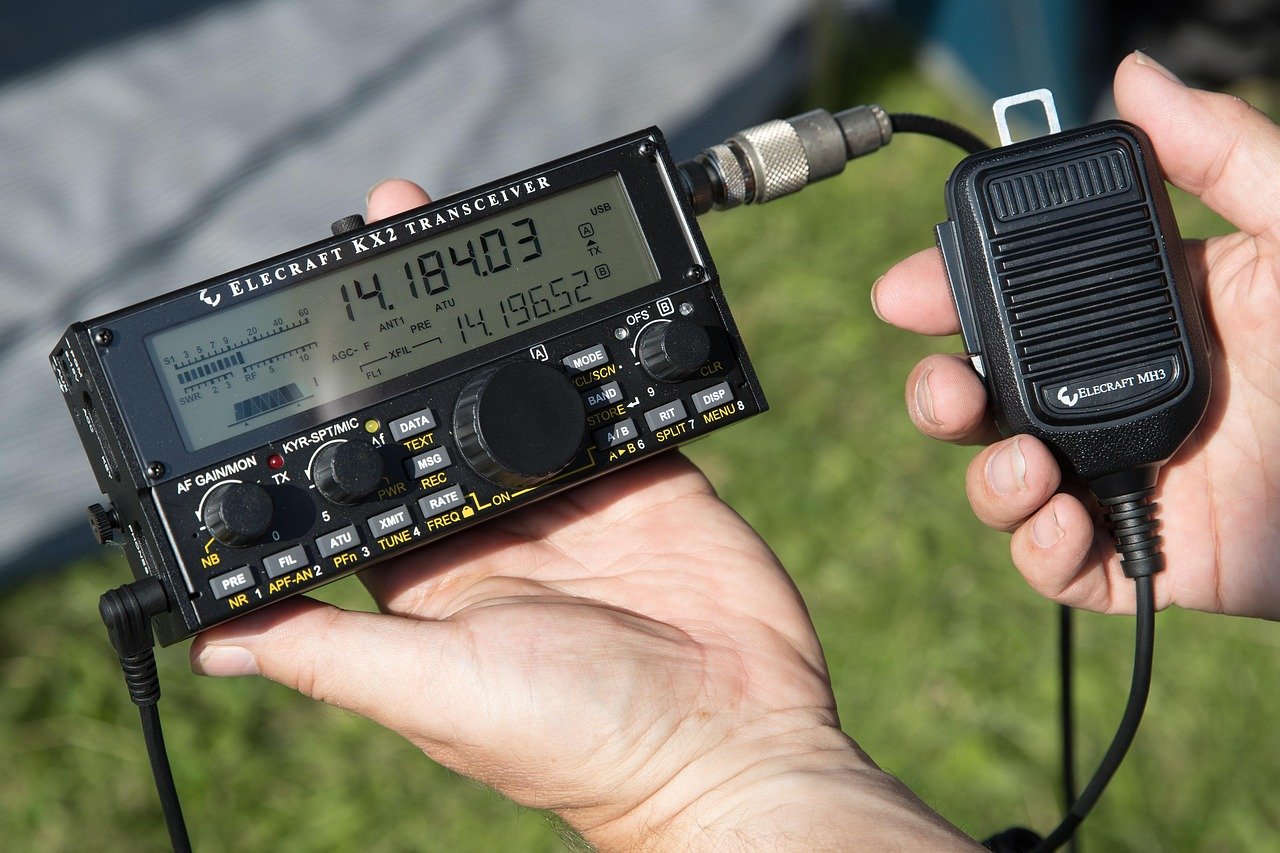
Cover photo: Michael_Kastelic / Pixabay